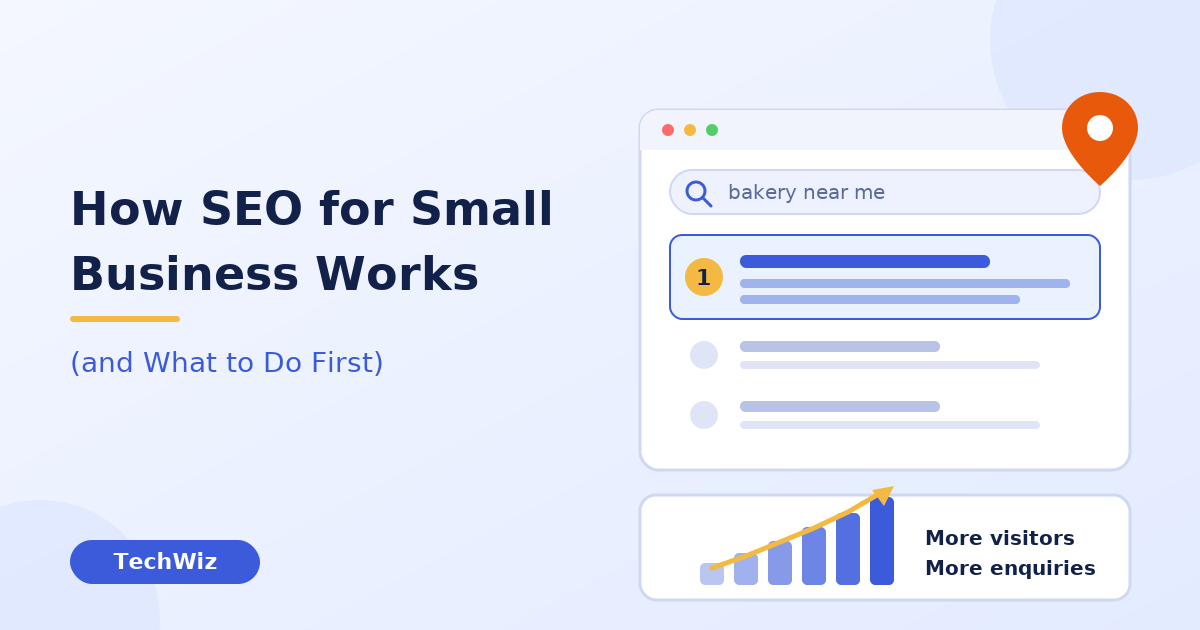
When someone searches for what you sell, who shows up? If it’s your competitor, that customer is gone before you even knew they were looking. That is the problem search engine optimisation (SEO) is meant to solve.
Many small business owners put off SEO because it sounds technical, expensive or both. In reality, the basics are simple. This guide explains how SEO for small business works, in plain language, and then gives you a clear order of what to do first.
How search engines work, in simple terms
Search engines like Google work in three broad steps. First, they discover pages by following links around the web, which is called crawling. Next, they read and store what they find, which is called indexing. Finally, when someone searches, they pick the pages they believe answer the question best and put them in order, which is called ranking.
SEO is what you do to help at each step. You make sure your pages can be found, you make it clear what they are about, and you give people a good reason to trust you over the other results.
It isn’t a trick, and nobody can honestly guarantee you the top spot. It’s closer to good housekeeping: a clear website, helpful content and a good reputation, kept up steadily over time.
Why it matters for a small business
Paid ads stop the moment you stop paying. A page that ranks well can keep bringing in visitors month after month. People who find you through search are also already looking for what you offer, so they tend to be more ready to act than someone who happened to scroll past an ad.
For a business with a limited budget, that makes SEO a strong foundation. It doesn’t replace ads or social media, but it’s the part that builds value over time.
The three parts of SEO
It helps to know what you’re working on. Most SEO falls into three areas.
- On-page SEO is what’s on your pages: the words, titles, headings and images.
- Technical SEO is how your site works: how fast it loads, how it looks on a phone and whether it’s secure.
- Off-page SEO is the trust you earn elsewhere: reviews, mentions and links from other websites.
If your customers are local, there is a fourth part, which is local SEO. It covers how your business appears on Google Maps and in “near me” searches.
What to do first
If you only have a few hours a week, work through these steps in order.
Step 1: Find out what your customers search for
Think like a customer, not like a business owner. Customers rarely use your industry’s language.
Imagine a small dental clinic. The owner may think in terms of “restorative treatment”, while a patient types “dentist near me” or “how much does a filling cost”. If the website only uses the first wording, it can miss the people it wants to reach.
Write down five to ten phrases your customers might use. Type them into Google and look at the suggestions and the “People also ask” box. Then match each phrase to a page on your site, or note where a page is missing.
Step 2: Get the basics of your website right
You don’t need a perfect website, but a few things make a real difference.
- One page per main service. Don’t squeeze everything onto the homepage. A separate page for each service gives search engines, and visitors, a clear answer to a clear question.
- Clear page titles and descriptions. The title tells people what the page is about, and the description is your short pitch in the search results. Write both for people first.
- Headings and plain language. Use headings to organise a page, and write the way you would explain things to a customer in person.
- Speed and mobile. Most people search on their phones. If your site is slow or awkward on a small screen, visitors leave. Keeping it regularly updated and maintained helps protect both speed and security.
- Clear contact details. Make it obvious how to call, message or book. Ranking doesn’t help if visitors can’t find a way to get in touch.
Step 3: Set up your local presence
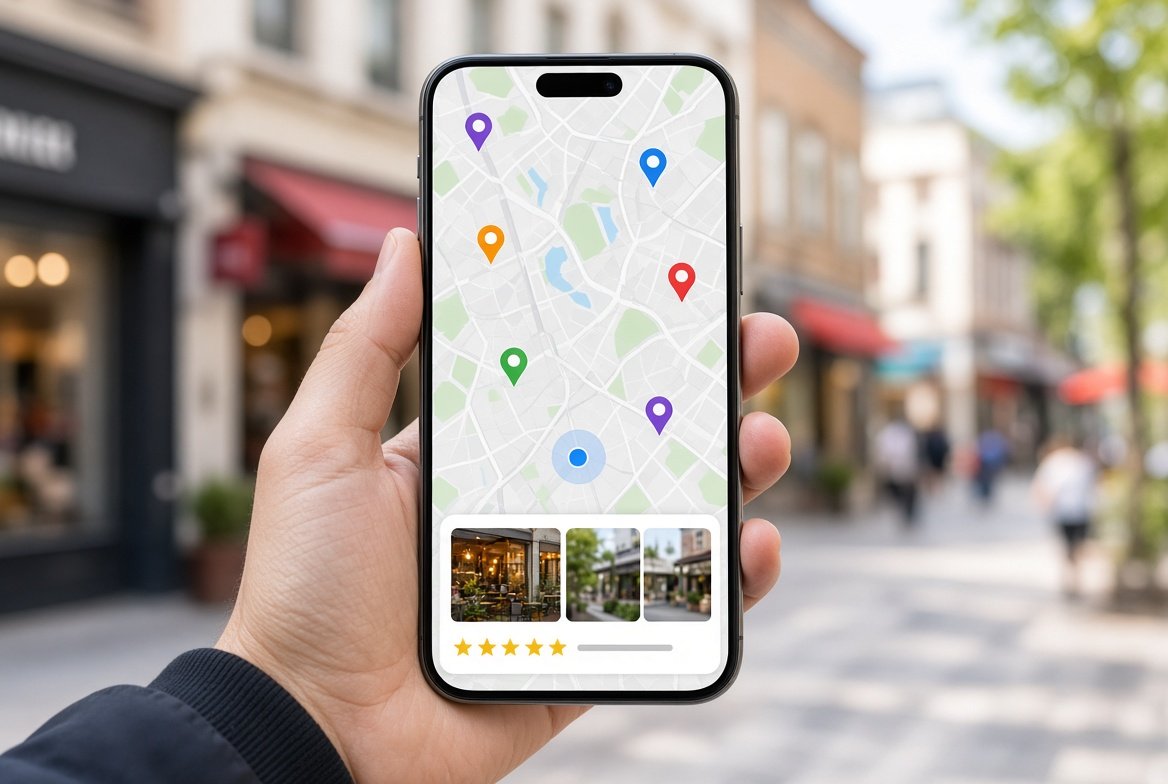
If your customers come from a particular area, your Google Business Profile is one of the most useful things you can set up. It controls how your business appears on Google Maps and in local results, with your address, hours, photos and reviews.
Keep your name, address and phone number the same on your website, your profile and your social pages. Small differences confuse both customers and search engines.
Step 4: Create content that answers real questions
Content is how you show that you know your subject. The best small business content answers questions your customers already ask you. If people keep asking how long a job takes, what affects the price or how to choose between two options, each of those questions can become a helpful page or blog post.
A few simple rules help:
- Write for the reader, not for the search engine
- Be specific and honest, and avoid vague claims
- Don’t copy text from suppliers or other websites
- Update older posts when things change
One genuinely useful article is worth more than ten thin ones published just to fill a calendar.
Step 5: Measure what matters
You can’t improve what you can’t see, and the main tools are free. Google Search Console shows which searches bring people to your site and which pages appear. Google Analytics shows how visitors behave once they arrive.
Check them once a month and ask a few simple questions. Which pages bring in visitors? What are people searching for before they find you? Are phone calls, form submissions and bookings going up? Visitors matter, but enquiries matter more.
Build trust beyond your own website
Search engines also look for signs that other people trust you. Good reviews, mentions on respected local sites and links from relevant websites all help.
Don’t buy links in bulk, because it can do more harm than good. Earn them instead by being listed in genuine business directories, working with suppliers and partners who will mention you, and creating something worth referring to, such as a clear guide or a useful tool.
How long does SEO take?
Usually months rather than days. The timeline depends on how competitive your market is, how old your website is and how much work goes into it. A business in a quiet local market may see movement sooner than one competing nationally.
Be wary of anyone who promises first-page results in a week. Early signs of progress are more modest: your pages appear for more searches, your position slowly improves and the number of enquiries starts to grow.
Common mistakes to avoid
- Stuffing keywords into text until it reads strangely
- Copying content from other websites
- Ignoring how the site looks and works on mobile
- Publishing a website and never updating it
- Overlooking reviews
- Expecting overnight results
- Chasing every new trend instead of getting the basics right
Should you do SEO yourself or hire help?
Plenty of the basics are easy to do yourself: complete your Google Business Profile, write clear page titles and create a page for each service. That alone puts many businesses ahead.
Outside help makes sense when you’re short on time, you work in a competitive market, your site has technical problems or you’re not seeing progress. A good partner will explain what they plan to do, won’t guarantee rankings and will report results in plain language.
Frequently asked questions
How much does SEO cost for a small business?
It varies with your market, your goals and how much work is needed. Ask any provider for a clear scope of what they will do, and be cautious about prices that seem too good to be true.
Do I need a blog for SEO?
Not at the start. Strong pages for your main services come first. A blog helps later by answering questions your customers ask and reaching people who are still researching.
Is SEO better than paid ads?
They do different jobs. Ads give quick visibility while you pay for them, and SEO builds visibility that lasts. Many businesses use both.
Can a new website rank on Google?
Yes, but it takes time to build trust. Start with clear service pages, a complete Google Business Profile and helpful content, then be patient.
Final thoughts
SEO for a small business doesn’t have to be complicated. Understand how search works, start with what your customers type, fix the basics of your website, set up your local presence and keep creating helpful content. Then check your results and keep improving.
If you’d like help working out where to start, get in touch and tell us about your business. We’ll talk through your goals and suggest a sensible next step.